

Launching Cosmetics in India: Domestic vs Imported | Fiducia Globus

India’s beauty and personal care industry is experiencing explosive growth. However, one of the most common challenges brands face is understanding that the process of launching a cosmetic in India depends entirely on where it’s made. Whether you’re manufacturing in India or overseas, your regulatory path, documentation, and approval timelines are completely different.
At Fiducia Globus Regulatory Consultancy, we specialize in helping both domestic and international cosmetic brands navigate these differences under the Cosmetics Rules, 2020. Here’s a quick breakdown to help you plan your launch more effectively.
Launching Cosmetics Manufactured in India
If your cosmetic is produced within India, you’ll need a **Manufacturing Licence** issued by the State Licensing Authority (SLA). This route is faster and focuses on local compliance with Good Manufacturing Practices (GMP) as defined under Schedule M-II.
**Key steps include:**
- Submitting Form COS-8 and obtaining the licence in Form COS-9.
- Ensuring your facility complies with Schedule M-II GMP requirements.
- Conducting in-house or third-party testing before release.
Timeline: Typically 2–3 months for approval.
🌍 Launching Imported Cosmetics in India
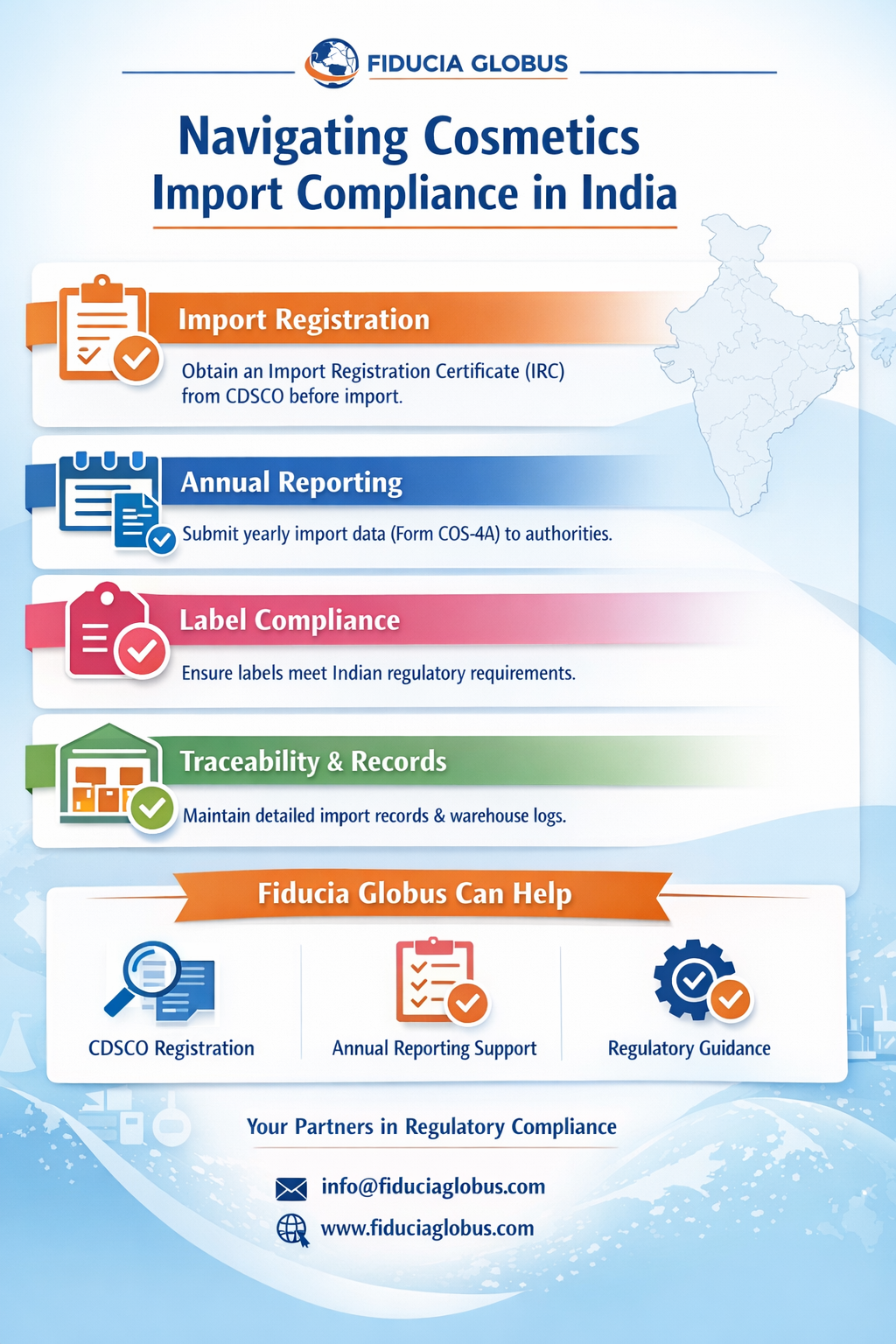
For cosmetics manufactured outside India, an **Import Registration Certificate** must be obtained from the Central Drugs Standard Control Organization (CDSCO). This is a mandatory step before import or sale in the Indian market.
**Key steps include:**
- Applying in Form COS-1; certificate issued in Form COS-2.
- Submitting documents such as Free Sale Certificate (FSC), ingredient list, and label artwork.
- Registering each manufacturing site and product category separately.
This process may take 6–9 months as CDSCO reviews dossiers and verifies overseas compliance. Post-approval, batches may be tested at ports or CDSCO labs.
⚖️ Quick Snapshot
|
Aspect |
Manufactured in India |
Manufactured Outside India |
|
Regulatory Authority |
State Licensing Authority (SLA) |
Central Drugs Standard Control Organization (CDSCO) |
|
Licence Type |
Manufacturing Licence (Form COS-9) |
Import Registration Certificate (Form COS-2) |
|
Timeline |
2–3 months |
6–9 months |
|
Compliance Reference |
Schedule M-II & Rule 34 |
Cosmetics Rules, 2020 |
|
Testing |
In-house or approved lab |
CDSCO / Port verification |
💡 Why These Differences Matter
Many global beauty brands assume that if a product is approved abroad, it can be directly marketed in India. Unfortunately, that’s not true. Similarly, Indian startups importing ready-to-sell cosmetics often face delays due to missing documents or unclear regulatory steps.
Understanding your correct pathway—domestic or import—helps you set realistic launch timelines, prevent customs delays, and ensure smooth compliance with Indian labelling and safety norms.
✳️ How Fiducia Globus Can Help
At Fiducia Globus Regulatory Consultancy, we provide end-to-end cosmetic regulatory support in India, including:
- CDSCO import registration and dossier preparation (Form COS-1 & COS-2).
- State manufacturing licence applications (Form COS-8 & COS-9).
- Ingredient and label compliance review as per Indian regulations.
- Coordination with CDSCO, SLA, and testing laboratories.
Our mission is to make your cosmetic launch in India seamless, compliant, and efficient — whether you’re a new brand or a global player entering the Indian market.
🚀 Ready to launch your cosmetic brand in India? Partner with Fiducia Globus Regulatory Consultancy for a stress-free, fully compliant market entry.