


8 Common Regulatory Mistakes International Cosmetic Brands Make When Entering India

What overseas cosmetic companies should check before importing and selling cosmetics in the Indian market
Entering the Indian cosmetics market can be a significant opportunity for international brands but regulatory compliance should be addressed before products are shipped. India regulates imported cosmetics under the Drugs and Cosmetics Act, 1940 and the Cosmetics Rules, 2020, with import registration handled by CDSCO. Products, variants, pack sizes and manufacturing premises are subject to applicable registration requirements before import.
1. Assuming EU or US Compliance Automatically Means India Compliance
A product compliant with EU, US, UK or other international requirements may still require an India-specific regulatory assessment.
India has its own requirements for cosmetic ingredients, product standards, claims, labelling, documentation and import registration. International compliance can provide useful supporting documentation, but it does not replace Indian regulatory requirements.
2. Shipping Products Before CDSCO Registration
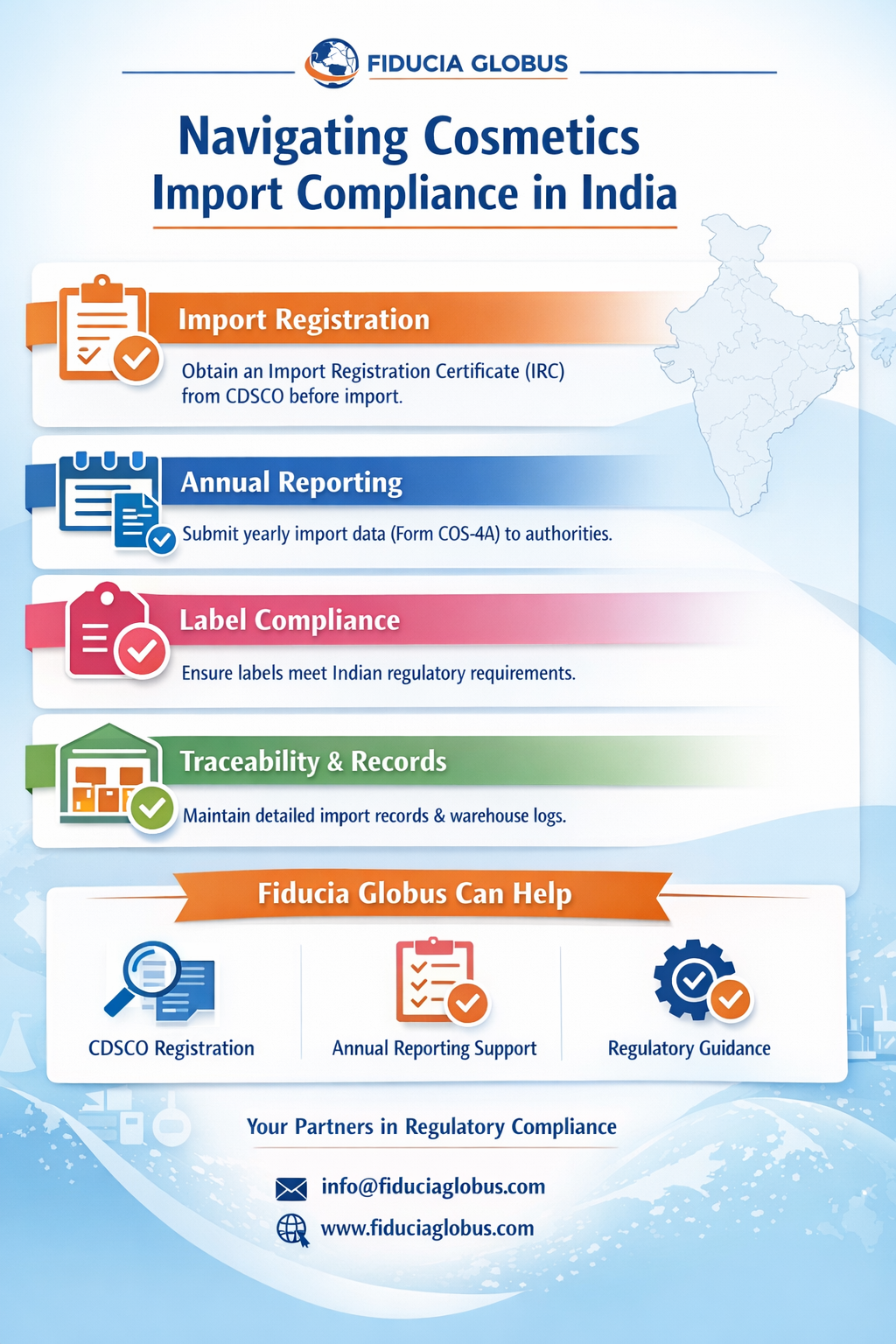
One of the most important requirements for imported cosmetics is obtaining the applicable CDSCO Import Registration Certificate before importing the products into India.
Under the Cosmetics Rules, 2020, cosmetics intended for import must be registered with the Central Licensing Authority. CDSCO guidance also requires registration covering relevant products, variants, pack sizes and manufacturing premises.
3. Not Checking Applicable BIS Standards
Cosmetic products imported into India must comply with applicable quality and safety standards under the Cosmetics Rules, including relevant BIS standards where applicable.
This is particularly important for product categories that have specific Indian standards or requirements.
4. Using Claims That Are Not Appropriate for Cosmetics
Claims are an important part of cosmetic regulatory compliance.
Statements such as “treats acne,” “cures eczema,” “stops hair loss” or other therapeutic claims may raise regulatory concerns depending on the product, formulation and intended use.
The Cosmetics Rules state that a cosmetic should not make claims that are false or misleading to the intended user.
5. Ignoring Indian Labelling Requirements
International brands often try to use the same artwork across multiple markets. However, Indian requirements should be reviewed separately.
Before finalising packaging, brands should assess applicable requirements for product identity and description, ingredients, net contents, batch information, manufacturing and expiry/use-before information, importer details, warnings and directions, where applicable, and other mandatory declarations.
6. Treating Every Variant, Shade and Pack Size the Same
Cosmetic registration is not simply a matter of registering a brand name.
The regulatory submission may need to address specific products, variants, shades, pack sizes and manufacturing premises. CDSCO guidance recognises variants such as colours, shades and pack sizes within the registration framework.
7. Reviewing Manufacturer Documents Too Late
International cosmetic brands often begin the Indian registration process before confirming that their overseas manufacturer can provide all required documentation.
This can create avoidable delays when documents need correction, clarification, legalisation or additional information.
8. Changing the Formula or Label Without Regulatory Review
A formulation change, new ingredient, supplier change, new claim or packaging update may have regulatory implications.
Even when a change appears commercially minor, it should be assessed against the applicable Indian requirements before the revised product is imported or marketed.
What International Cosmetic Brands Should Do Before Entering India
A successful India market-entry strategy should address regulatory compliance before the first shipment.
Product classification → Ingredient assessment → BIS/standards review → Claims assessment → Label review → Manufacturer documentation → CDSCO registration → Import readiness
CDSCO has also continued to issue compliance-related actions and notices in 2026, including a July 2026 circular concerning vigilance on imported cosmetics being sold without a valid Import Registration Certificate. This reinforces the importance of ensuring that regulatory requirements are addressed before products enter the Indian market.
Need Regulatory Support for Cosmetic Import into India?
Fiducia Globus supports international cosmetic brands with India regulatory compliance and market-entry requirements, including:
Cosmetic product regulatory assessment
Ingredient and claims review
CDSCO Import Registration support
BIS requirements assessment
Indian cosmetic label review
Manufacturer documentation review
Regulatory gap assessment
Ongoing regulatory support
Planning to import cosmetics into India?
Contact Fiducia Globus to discuss your product and India market-entry requirements before you ship.
Categories
Related Posts
-
Bombay High Court Clarifies CDSCO Compliance for Imported Cosmetics in India

-
Exporting Natural Health Products from India to Canada: A Practical Regulatory Guide for Indian Manufacturers

-
India Tightens Compliance for Imported Cosmetics: How Fiducia Globus Enables Seamless Market Entry
-
Launching Cosmetics in India: Domestic vs Imported | Fiducia Globus
