


Cosmetics
1. Understanding Cosmetics Under Indian Law
In India, cosmetics are regulated under the Drugs & Cosmetics Act, 1940, which defines cosmetics as products intended to be applied to the human body for cleansing, beautifying, promoting attractiveness, or altering appearance.
Products such as skincare, haircare, oral care, fragrances, makeup, and personal hygiene products fall under this category.
However, products making therapeutic or medical claims may be classified as drugs and are subject to a completely different approval pathway.
Correct classification at an early stage is critical to avoid regulatory delays or rejections.
2. India’s Cosmetic Regulatory Framework
Cosmetics in India are governed by the Cosmetics Rules, 2020, enforced by the Central Drugs Standard Control Organization (CDSCO) and respective State Drug Control Authorities.
The regulatory framework covers:
- Import approvals
- Manufacturing licenses
- Ingredient safety
- Labeling and packaging
- Post-market compliance
Fiducia Globus helps brands stay aligned with current Indian regulations, which continue to evolve in line with global safety expectations.
3. Who Is Responsible for Compliance?
Cosmetic compliance in India can be handled by:
- The manufacturer
- The brand owner
- An importer
- An Authorized Indian Agent
For overseas manufacturers, appointing a legally established Indian entity is mandatory.
This entity becomes responsible for regulatory communication, compliance maintenance, and authority coordination.
We help clients select the most appropriate and compliant applicant structure, especially for foreign brands entering India for the first time.
4. Imported vs Locally Manufactured Cosmetics
India follows separate regulatory pathways for imported and domestically manufactured cosmetics.
- Imported cosmetics require central registration with CDSCO
- Cosmetics manufactured in India require licenses from State Authorities
Understanding the correct pathway helps brands decide whether to import finished products or manufacture locally, based on cost, timelines, and long-term strategy.
Fiducia Globus provides regulatory clarity at this decision stage.
5. Regulatory Pathway for Imported Cosmetics
All cosmetic products imported into India must obtain prior registration from the Central Drugs Standard Control Organization (CDSCO) before shipment, customs clearance, or sale in the Indian market.
The import registration process involves both product-level approval and manufacturing site registration, ensuring that the cosmetics are manufactured at compliant facilities and meet Indian safety and quality requirements.
The regulatory pathway typically includes:
-
Product & Ingredient Evaluation
Each cosmetic product is assessed to confirm its classification as a cosmetic under Indian law. Ingredients are reviewed against Indian regulatory schedules to identify any restricted or prohibited substances, and claims are evaluated to ensure they remain cosmetic in nature.
-
Manufacturing Site Registration
Details of the overseas manufacturing facility are reviewed and registered as part of the application. This includes verification of the manufacturing address, quality certifications, and regulatory standing in the country of origin.
-
Regulatory Dossier Preparation
A comprehensive dossier is prepared, covering product specifications, manufacturing information, free sale certification, label artworks, and authorization documents for the Indian applicant.
-
Online Submission via CDSCO Portal (Form COS-2)
The application is submitted electronically through the CDSCO portal along with applicable government fees. A single registration can cover multiple products, variants, and shades manufactured at the same approved site under one brand.
-
Regulatory Review & Approval
CDSCO evaluates the application and may raise technical or documentation queries. Once satisfied, the authority issues the import registration certificate, permitting import and sale in India.
Fiducia Globus manages the entire import registration lifecycle, including manufacturing site registration, product approvals, authority coordination, and post-approval compliance to ensure smooth and uninterrupted market entry into India.
6. Licensing Pathway for Indian Manufacturing Units
Cosmetics manufactured in India require a Manufacturing License issued by the respective State Drug Control Authority.
The licensing process evaluates:
- Facility infrastructure
- Hygiene and GMP practices
- Qualified technical staff
- Product formulations and records
Fiducia Globus assists manufacturers with licensing, renewals, and modifications, ensuring continuous compliance.
7. Product Classification, Variants & Fee Structure
Government fees for cosmetic registration in India depend on:
- Number of brands
- Number of products or variants
- Manufacturing locations
Fees are prescribed under the Cosmetics Rules and payable directly to the government portal.
Incorrect classification or incomplete planning can lead to unnecessary costs.
We help brands optimize registrations while remaining fully compliant.
8. Compliance Essentials Before Filing
Before submitting any application, brands must ensure:
- Ingredients comply with Indian safety schedules
- Products are not tested on animals
- Claims are cosmetic in nature
- Labels meet Indian regulatory requirements
Skipping this compliance check often leads to application rejection or import detention.
Fiducia Globus conducts pre-filing compliance reviews to reduce regulatory risk.
9. Building a Compliant Regulatory Dossier
A regulatory dossier is the foundation of cosmetic approval in India.
It typically includes:
- Product details and formulations
- Manufacturer information
- Free Sale Certificate (for imports)
- Label artworks
- Authorization documents
We prepare dossiers that are clear, consistent, and regulator-ready, minimizing back-and-forth with authorities.
10. India-Specific Label & Packaging Requirements
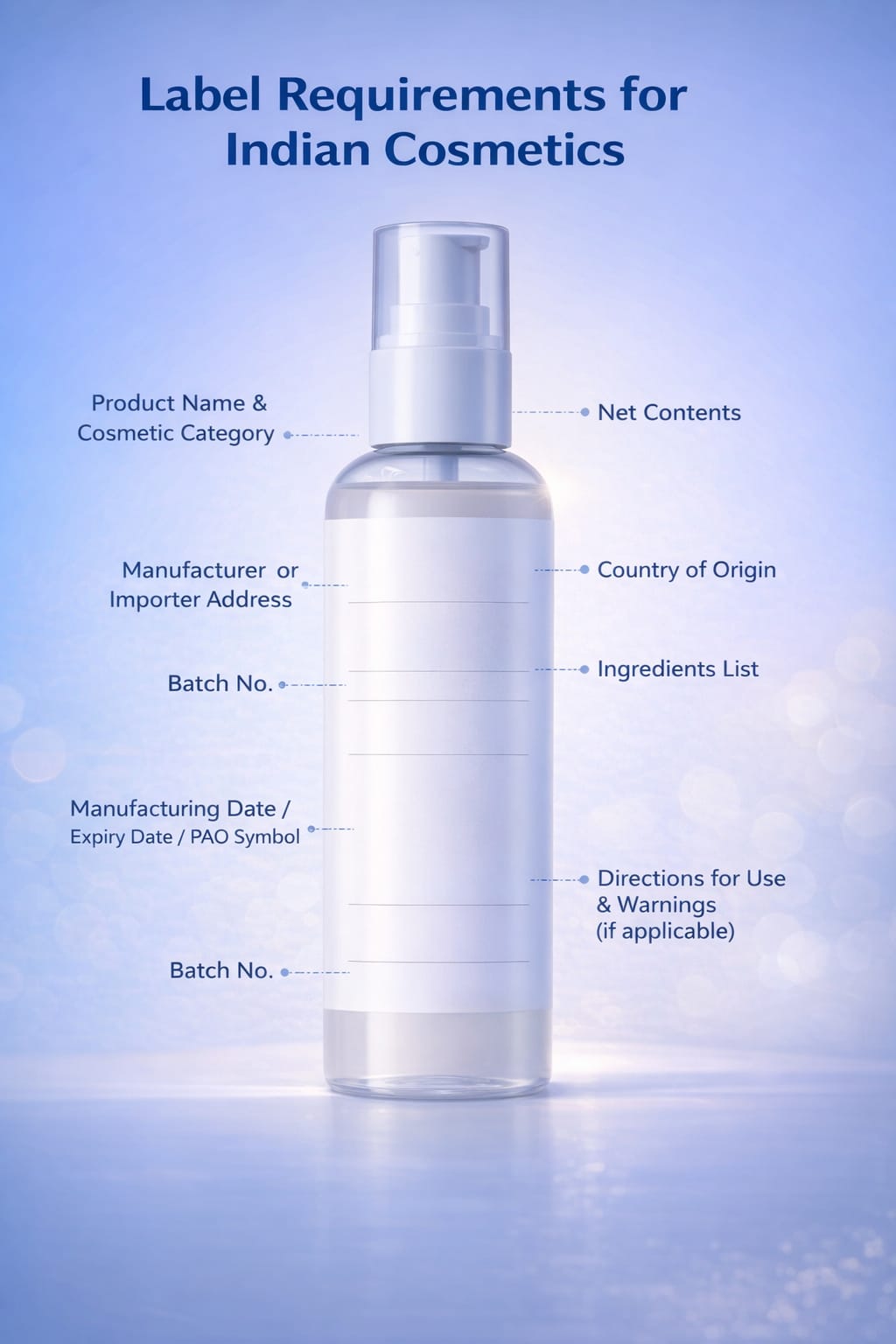
India has strict labeling requirements for cosmetics, including mandatory declarations such as:
- Product identity
- Manufacturer / importer details
- Batch number and expiry
- Directions for use and warnings
- Country of origin (for imports)
Labels must be compliant before import.
Fiducia Globus reviews labels and artworks to prevent customs or regulatory issues.
11. Import Registration Application Process (COS-2)
Form COS-2 is used to apply for cosmetic import registration in India.
The process involves:
- Online submission via CDSCO portal
- Government fee payment
- Regulatory evaluation
- Issuance of registration certificate
Once approved, the registration is typically valid for up to five years, subject to compliance.
12. Post-Approval Compliance & Market Oversight
Regulatory responsibility continues even after approval.
Brands must manage:
- Registration renewals
- Product or label changes
- Authority inspections
- Market surveillance compliance
Fiducia Globus offers ongoing regulatory support, ensuring uninterrupted business operations in India.
Label Compliance
Cosmetic products marketed in India must comply with the labeling requirements prescribed under the Cosmetics Rules, 2020. Labels must provide clear, accurate, and complete information to ensure consumer safety and regulatory transparency.
Every cosmetic label must include mandatory declarations such as the product name, net contents, manufacturer or importer details with an Indian address, batch number, manufacturing or expiry details, ingredients list, and maximum retail price (MRP) in Indian Rupees. Imported cosmetics must additionally declare the country of origin and Indian importer details.
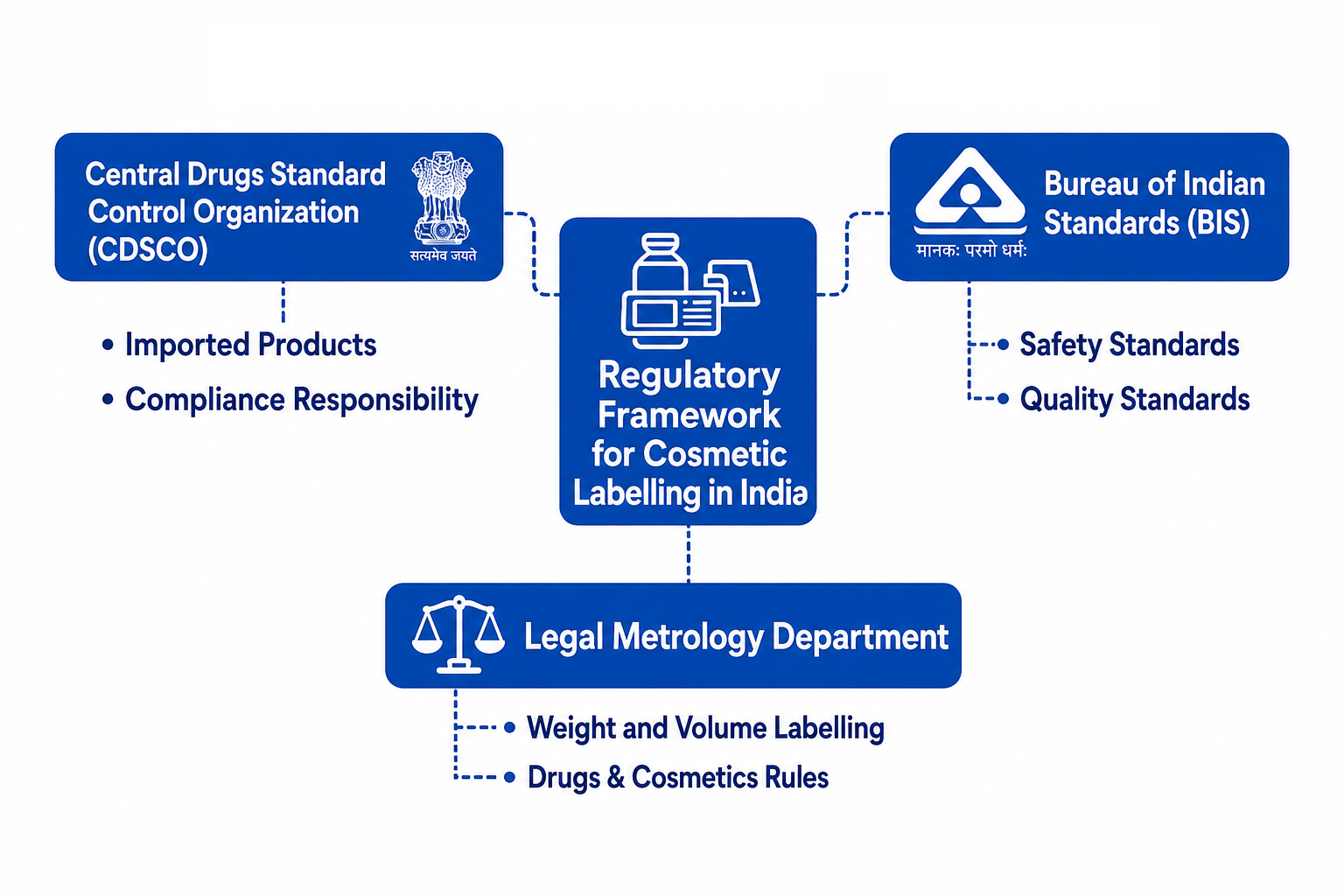
In addition to the Cosmetics Rules, cosmetic labeling in India must also comply with requirements prescribed by CDSCO, the Legal Metrology (Packaged Commodities) Rules, and applicable Bureau of Indian Standards (BIS) specifications, wherever notified. These regulations collectively govern declarations, measurement accuracy, safety standards, and consumer information.
Non-compliant labeling is one of the most common reasons for market objections, stop-sale notices, and regulatory action by State Drug Control Authorities. Proper label review prior to product launch helps avoid delays, penalties, and product recalls.
Labeling requirements may vary depending on the product category, composition, intended use, and applicable regulatory standards.