

Canada vs. USA Cosmetic Labelling Requirements: Key Differences Brands Must Know in 2026
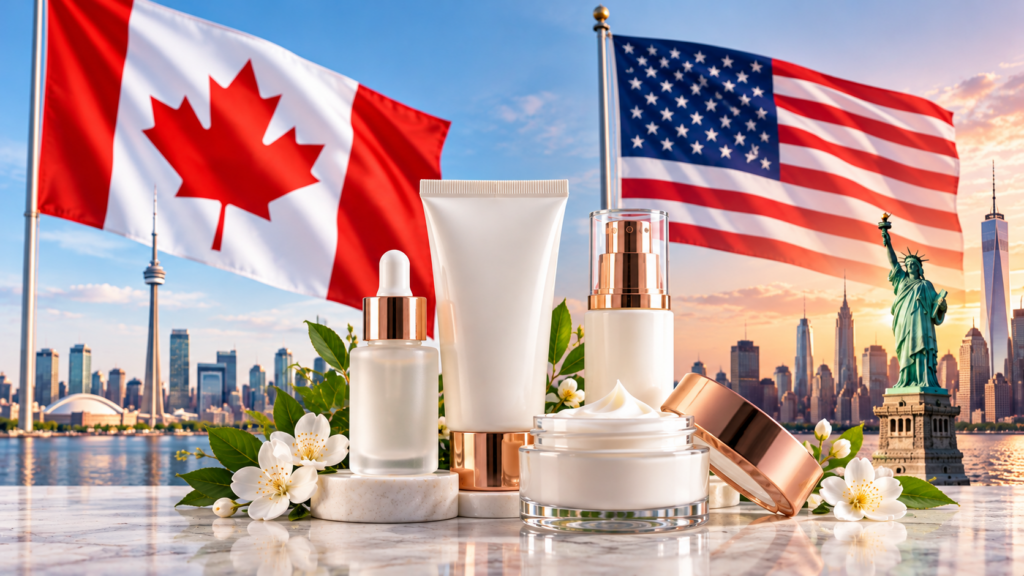
Although Canada and the United States share several cosmetic regulatory principles, their labelling requirements differ in important ways. International cosmetic brands should review each market separately before finalising packaging artwork.
1. Language Requirements
In Canada, applicable cosmetic labelling information generally needs to be provided in English and French, subject to specific exceptions. In the United States, required label information generally must appear in English. Additional requirements may apply when foreign-language statements are included on the label.
2. Ingredient Nomenclature
Canada generally uses International Nomenclature of Cosmetic Ingredients (INCI) names for cosmetic ingredient declarations. US cosmetic labels must comply with FDA ingredient declaration requirements and applicable naming conventions. Brands should verify ingredient names and declaration requirements for each market.
3. Ingredient Order
Both Canada and the United States generally require cosmetic ingredients to be listed in descending order of predominance, subject to applicable exceptions. Manufacturers should review the finished formulation and ensure the ingredient declaration follows the relevant market-specific rules.
4. Net Quantity Declaration
Canadian cosmetic labels require net quantity declarations in metric units. In the United States, net quantity generally must be declared using US customary units, although metric units may also be included. Packaging artwork should be reviewed to ensure the declaration meets the requirements of each market.
5. Product Identity
In Canada, the required product identity information must generally be presented in English and French. In the United States, the product identity must appear on the principal display panel in accordance with applicable FDA labelling requirements.
6. Dealer and Business Information
Canadian cosmetic labels must include the applicable dealer identity and principal place of business information. In the United States, the label generally must identify the manufacturer, packer, or distributor and provide the required business address information.
7. Consumer Contact Information and Adverse Event Reporting
Under MoCRA, the US Responsible Person must provide a domestic address, domestic phone number, or electronic contact information through which the Responsible Person can receive reports of adverse events. Canadian cosmetic businesses should separately assess the applicable dealer identification, contact information, and regulatory reporting obligations.
8. Fragrance Allergen Disclosure
Canada has introduced expanded fragrance allergen disclosure requirements, including individual declaration of specified allergens when their concentrations exceed applicable thresholds. The United States does not have an equivalent general federal requirement to individually disclose the same expanded list of fragrance allergens. Brands selling in both countries should review fragrance composition information and ingredient declarations against the requirements applicable to each market.
9. Cosmetic Notification and Product Listing
In Canada, manufacturers and importers generally must submit a Cosmetic Notification Form (CNF) to Health Canada within 10 days after the first sale of a cosmetic product. A CNF is a notification, not an approval or certification of compliance.
In the United States, MoCRA introduced cosmetic facility registration and product listing requirements, subject to applicable exemptions. These obligations are different from Canada’s Cosmetic Notification Form process.
10. Claims and Product Classification
In both countries, cosmetic claims and intended use can affect regulatory classification. In Canada, a product may fall outside the cosmetic category if its composition, claims, or intended use place it within another regulated category. Similarly, in the United States, claims to treat or prevent disease or affect the structure or function of the body may cause a product to be regulated as a drug rather than a cosmetic.
What Should International Cosmetic Brands Do?
Brands entering both markets should conduct separate Canadian and US regulatory reviews before approving packaging artwork. This should include ingredient declarations, language requirements, net quantity, business information, fragrance allergen disclosure, notification or listing obligations, and marketing claims.
A market-specific label review can help identify regulatory gaps before packaging is printed and products are shipped.
How Fiducia Globus Can Help
Fiducia Globus supports international cosmetic brands with Canadian and US cosmetic labelling reviews, ingredient compliance assessments, fragrance allergen disclosure reviews, MoCRA compliance, Cosmetic Notification Form support, and regulatory market-entry consulting.
Contact Fiducia Globus to discuss your cosmetic labelling and regulatory compliance requirements before launching your products in Canada or the United States.
Disclaimer: This article is intended for general regulatory information and is not a substitute for a product-specific compliance assessment. Requirements should be verified against current legislation and applicable regulatory guidance before implementation.
Categories
Related Posts
-
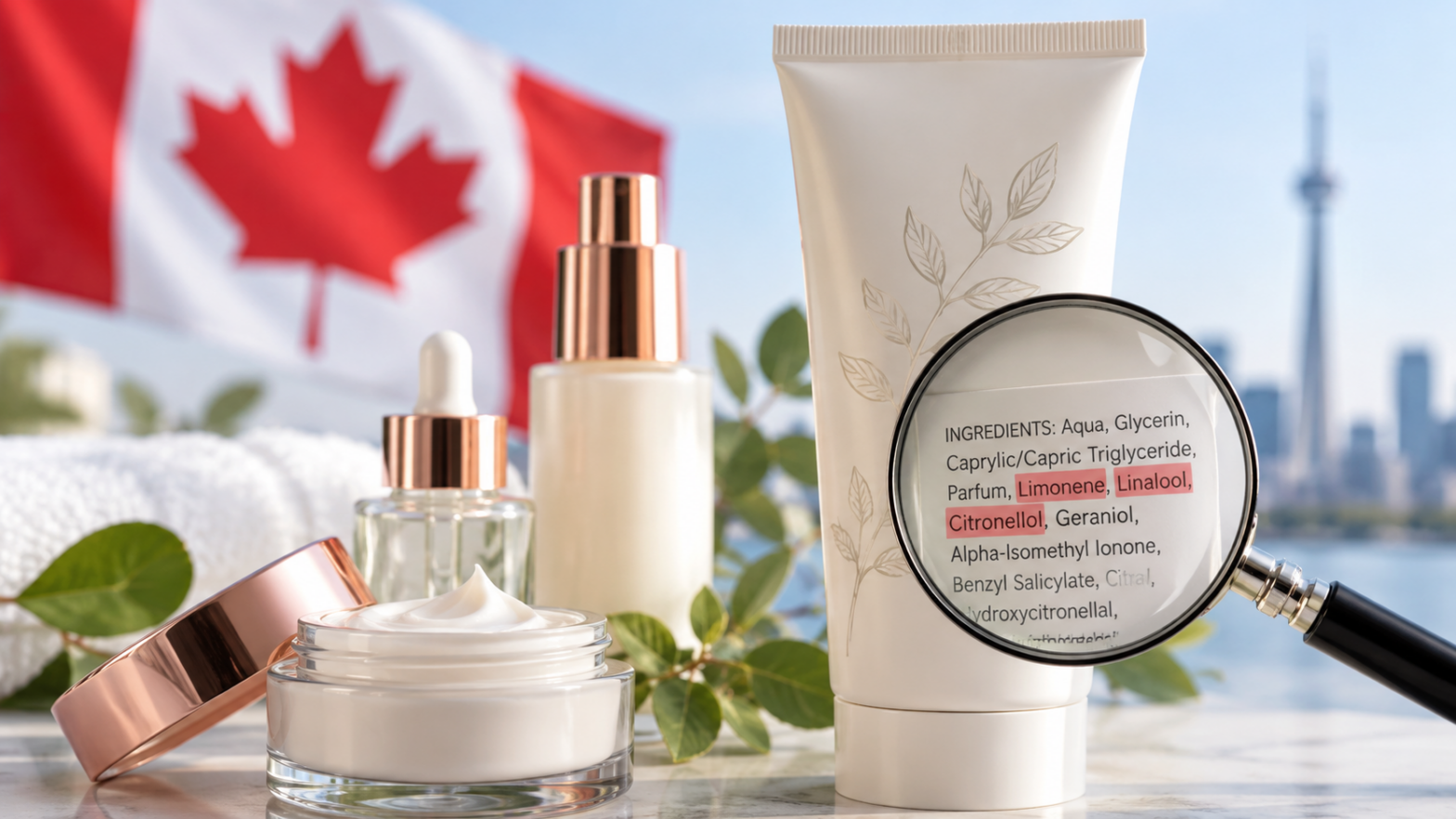
Canada Cosmetic Labelling Requirements 2026: Fragrance Allergen Disclosure Guide for Cosmetic Brands
-
Exporting Natural Health Products from India to Canada: A Practical Regulatory Guide for Indian Manufacturers

-
Health Canada LiquidFiles Transition 2026: Complete Compliance Guide for NHP Site Licence Submissions
-
Cosmetic Claims That Can Trigger FDA Drug Classification: A Compliance Guide for Cosmetic Brands

-
7 FDA Compliance Mistakes That Get Supplement & Cosmetic Brands Pulled From Amazon USA (And How to Avoid Them)
