


Health Canada’s Red Tape Reduction Initiative: What the Latest NHP Regulatory Changes Mean for Manufacturers
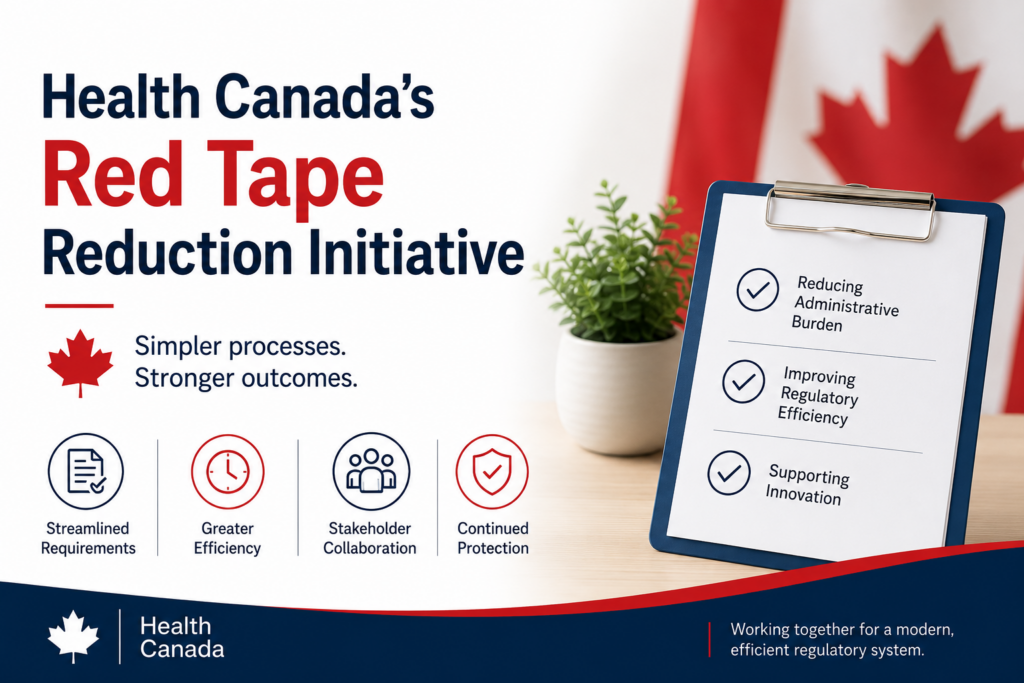
Health Canada has launched a new consultation under its Red Tape Reduction Initiative, inviting feedback from stakeholders on opportunities to simplify regulatory processes while maintaining Canada’s high standards for consumer safety.
For manufacturers, importers, private-label brand owners, and regulatory professionals working with Natural Health Products (NHPs), this initiative represents an important opportunity to influence the future of Canada’s regulatory framework.
While the initiative does not reduce regulatory requirements, it aims to improve administrative efficiency, modernize regulatory processes, and eliminate unnecessary paperwork that no longer contributes to public health protection.
What Is the Health Canada Red Tape Reduction Initiative?
The Red Tape Reduction Initiative is a government consultation designed to identify administrative requirements that create unnecessary burden for regulated industries without improving regulatory outcomes.
Health Canada’s objective is not to weaken regulatory oversight. Instead, it seeks practical recommendations that simplify compliance processes while maintaining product safety, quality, and consumer confidence.
This initiative forms part of the Government of Canada’s broader effort to modernize regulations, improve service delivery, and support innovation across regulated industries.
Why Is Health Canada Consulting Industry Stakeholders?
Manufacturers, importers, distributors, consultants, healthcare professionals, and trade associations interact with Health Canada’s regulatory system every day.
Their operational experience provides valuable insight into:
• Administrative duplication
• Unnecessary documentation
• Digital service improvements
• Regulatory communication
• Process efficiency
• Opportunities for modernization
The consultation allows Health Canada to identify practical improvements that benefit both regulators and industry.
Which Regulatory Areas Could Be Affected?
Although Health Canada has not proposed specific regulatory amendments, several areas may be considered for future improvements, including:
• Product Licence Applications (PLAs)
• Good Manufacturing Practices (GMP)
• Site Licensing
• Regulatory guidance documents
• Digital submission systems
• Communication processes
Any future changes will continue to prioritize consumer safety while reducing unnecessary administrative complexity.
Building on Recent Regulatory Modernization
The Red Tape Reduction Initiative follows several recent modernization efforts, including Health Canada’s decision to discontinue the routine submission of Finished Product Specifications (FPS) for many Class II and Class III Product Licence Applications.
That policy demonstrated Health Canada’s willingness to remove unnecessary administrative requirements while maintaining robust regulatory oversight and quality expectations.
Together, these initiatives indicate a broader shift toward risk-based regulation and more efficient compliance processes.
Why This Matters for NHP Companies
Reducing unnecessary administrative burden allows companies to focus more resources on:
• Product innovation
• Quality assurance
• Regulatory compliance
• New product development
• Customer service
• Market expansion
While submission requirements may evolve, manufacturers remain fully responsible for complying with all applicable regulations and maintaining strong quality systems.
How Businesses Should Prepare
Companies should use this consultation period to evaluate their regulatory programs and identify opportunities for continuous improvement.
Recommended actions include:
• Reviewing internal compliance procedures
• Maintaining strong GMP systems
• Monitoring Health Canada announcements
• Participating in stakeholder consultations
• Documenting practical recommendations based on operational experience
Organizations that remain engaged with regulatory developments will be better positioned to adapt to future policy changes.
How Fiducia Globus Supports Natural Health Product Companies
Fiducia Globus provides comprehensive regulatory consulting services for Natural Health Products in Canada, including:
• Natural Product Number (NPN) applications
• Product Licence Applications
• Site Licence support
• GMP consulting
• Label compliance reviews
• SOP development
• Regulatory strategy
• Canadian market entry consulting
• Ongoing Health Canada compliance support
Our regulatory specialists help manufacturers, importers, and brand owners navigate evolving Health Canada requirements with confidence.
Conclusion
Health Canada’s Red Tape Reduction Initiative represents another important step toward modernizing Canada’s Natural Health Product regulatory framework.
Although the initiative focuses on reducing unnecessary administrative burden, businesses should recognize that quality expectations, GMP requirements, and regulatory accountability remain unchanged.
Companies that stay informed, maintain robust compliance systems, and actively participate in regulatory consultations will be best positioned to benefit from future improvements while continuing to meet Health Canada’s high standards for product quality and consumer safety.
Frequently Asked Questions
What is Health Canada’s Red Tape Reduction Initiative?
It is a government consultation aimed at reducing unnecessary administrative requirements while maintaining Canada’s regulatory standards for safety and quality.
Will the Red Tape Reduction Initiative change NHP regulations?
The consultation itself does not introduce regulatory changes but may lead to future amendments that simplify compliance processes.
Who should participate in the consultation?
Manufacturers, importers, distributors, consultants, regulatory professionals, healthcare practitioners, and trade associations involved in the Natural Health Products industry.
Does this initiative reduce GMP requirements?
No. Good Manufacturing Practice requirements remain fully applicable.
Categories
Related Posts
-
FDA One-Day Inspectional Assessments: What FDA-Regulated Companies Need to Know in 2026

-
How K-Beauty Brands Can Comply with U.S. FDA MoCRA and Health Canada Regulations in 2025
-
Health Canada Proposes Extension to Natural Health Product Labelling Compliance Timelines: What NHP Companies Need to Know
-
Understanding the Canadian Cosmetic Ingredient Hotlist: What It Means for Your Business
-
Health Canada Introduces Workload Management Form for Class II & III NHP Licence Applications