

Health Canada Reclassifies Sports Electrolyte Products as Foods: What Brands Need to Know
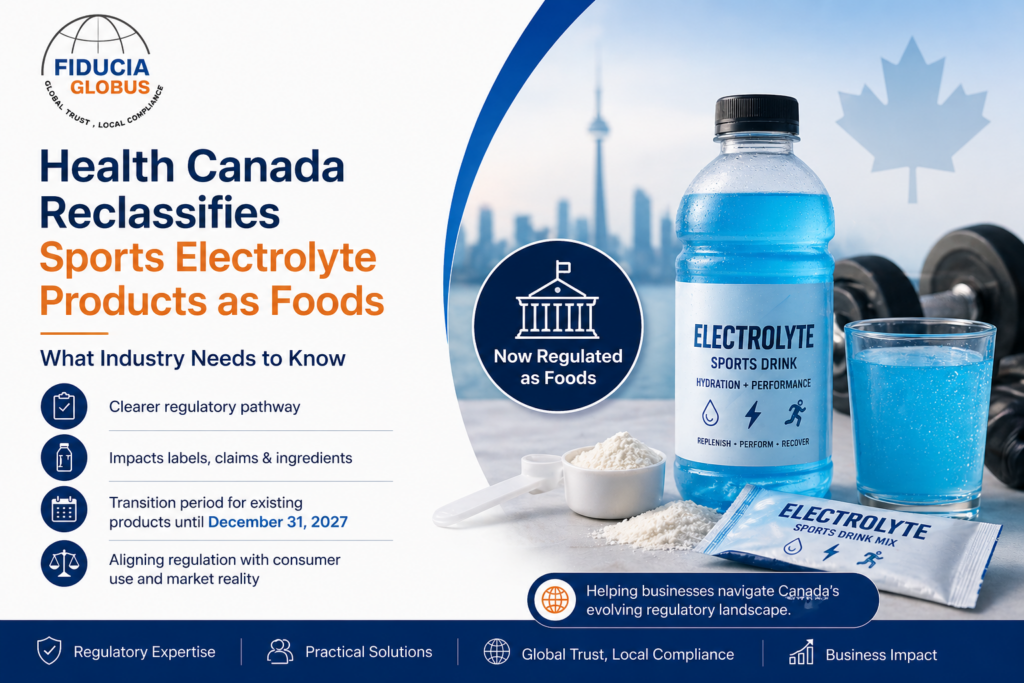
Health Canada has updated the regulatory treatment of many sports electrolyte products, moving them under the food framework instead of the Natural Health Product (NHP) pathway. This is an important development for brands manufacturing, importing, exporting, or selling hydration and performance products in Canada.
For companies operating in competitive markets, product classification is not just a technical issue—it directly affects market access, labeling, claims, customs clearance, and long-term business growth.
If your company sells hydration drinks, powders, effervescent tablets, or sports recovery products, this regulatory shift deserves immediate attention.
What Has Changed?
Health Canada has clarified that many sports electrolyte products are more appropriately regulated as foods rather than Natural Health Products.
This decision reflects how consumers typically use these products:
Consumed like beverages or drink mixes
Used for hydration during exercise
Purchased as everyday sports nutrition products
Presented as refreshment or performance support rather than therapeutic treatment
As a result, products that were previously assumed to fit under the NHP category may now need to comply with food regulations.
Why This Change Matters
This is more than a classification update—it can reshape your regulatory strategy in Canada.
The applicable regulatory pathway determines:
Labeling rules
Ingredient permissions and limits
Packaging presentation
Advertising claims
Licensing expectations
Import documentation
Retail acceptance
Using the wrong pathway may lead to:
Product launch delays
Customs holds
Label redesign costs
Enforcement risk
Sales disruption
For growing brands, these mistakes can become expensive quickly.
Products Potentially Affected
The following product categories may be impacted depending on composition, claims, and presentation:
Electrolyte drinks
Hydration beverages
Sports drink concentrates
Hydration powders
Effervescent hydration tablets
Sports recovery beverage mixes
Performance hydration products
Ready-to-drink electrolyte formulas
Every product should be assessed individually based on its formulation and marketing position.
Why Health Canada Is Taking This Approach
The updated position aims to create clearer and more consistent regulation.
Many sports electrolyte products are consumed in the same manner as foods and beverages—not as therapeutic products intended to diagnose, treat, or prevent disease.
This creates a more practical framework aligned with real consumer use.
In simple terms:
If a product behaves like a beverage in the marketplace, regulators may expect it to be treated like one.
Business Impact for Brands and Importers
Companies selling into Canada may need to reassess multiple areas of compliance.
1. Label Compliance
Food labels differ significantly from NHP labels.
You may need to review:
Mandatory declarations
Nutrition information requirements
Ingredient listing format
Allergen declarations
Bilingual labeling considerations
Net quantity statements
2. Claims Strategy
Marketing language may need revision.
Claims such as:
Performance enhancement
Therapeutic recovery
Medical hydration
Treatment-oriented wording
could create classification concerns.
3. Ingredient Review
Some ingredients, levels, or combinations may require reassessment under food rules.
4. Packaging Presentation
The overall look of the product can influence regulatory perception.
5. Import Readiness
Incorrect classification may create delays at the border or importer documentation issues.
Why Early Action Is Important
Waiting until enforcement issues arise can be costly.
Reactive changes often involve:
Emergency relabeling
Warehouse holds
Rejected shipments
Marketplace disruption
Retailer dissatisfaction
Increased compliance costs
A proactive review is usually faster, cheaper, and safer.
What Companies Should Do Now
If you manufacture or sell hydration products in Canada, consider taking these steps:
Conduct a Product Classification Review
Determine whether your product is best positioned under food or another framework.
Review Labels
Ensure packaging aligns with current Canadian expectations.
Evaluate Claims
Remove or refine statements that may trigger classification issues.
Assess Ingredient Acceptability
Check whether ingredients and usage levels fit the intended pathway.
Prepare Import Documentation
Make sure customs and importer records are aligned.
Build a Long-Term Canada Strategy
Use the correct framework from the start to scale smoothly.
Frequently Asked Questions
Are all sports electrolyte products now classified as foods?
Not automatically. Classification depends on ingredients, claims, format, presentation, and intended use. Many products may fall under food regulation, but each product requires review.
Can powders and tablets also be affected?
Yes. Powders, tablets, and other formats can still be considered foods depending on how they are marketed and consumed.
Do imported brands need to comply?
Yes. Imported products sold in Canada must meet Canadian requirements regardless of origin.
Can old labels still be used?
Possibly not. Existing labels may need updates depending on classification and content.
Can wrong classification delay customs clearance?
Yes. Misclassification can create border delays, holds, or requests for additional documentation.
Should I get a professional review before launch?
Yes. Early classification and label review can reduce risk and save time.
How Fiducia Globus Can Help
Fiducia Globus supports brands, manufacturers, exporters, and importers with Canada market-entry and compliance solutions, including:
Product classification assessments
Label compliance reviews
Ingredient checks
Claim strategy guidance
Import/export support
Regulatory roadmap planning
Whether you are launching a new hydration brand or correcting an existing compliance issue, strategic guidance can reduce delays and unnecessary costs.
Conclusion
Health Canada’s reclassification of many sports electrolyte products as foods is a significant development for the sports nutrition sector.
Brands that respond early can strengthen compliance, improve launch readiness, and avoid costly disruptions.
Companies that ignore classification changes may face delays, relabeling, and lost momentum.
If your business plans to sell hydration or performance products in Canada, now is the right time to review your regulatory strategy.
Official Reference
Health Canada Public Notice: Classification of sports electrolyte products as foods